
"a large"
44000 article(s) found

Small coffee, medium coffee, large coffee, brand, price, type, taste, introduction
Coffee small grain large grain contrast map brand price category manor taste introduction coffee growth and development and climate and environmental conditions are closely related. In the areas with strong wind, high temperature, strong light and easy drought soil, axillary buds tend to differentiate into flower buds, and the growth of branches is small, which is easy to cause premature senescence. Therefore, to choose quiet wind, humidity, light shorter place for garden. small

Kenya Coffee Bean Arabica Coffee Flavor description method Variety characteristics Manor introduction
Kenya is bordered to the north by Ethiopia, the origin of Arabica coffee trees, but it was not until the beginning of the 20th century that coffee cultivation began. In the 19th century, missionaries introduced Arabica trees from the leaves, but did not plant them in large quantities. It was not until 1893 that coffee was cultivated on a large scale because of the introduction of Brazil's ancient bourbon seeds. That is to say, Kenyan coffee is of Brazilian origin, because of water.
How do coffee merchants taste a large number of coffee samples in a short period of time?
How do coffee merchants taste a large number of coffee samples in a short period of time? That is the so-called cup method (cupping). On the other hand, the three main criteria for evaluating the quality of the cup test are Aroma, Body and Flavor. In the traditional cup test process, it is easy to drink coffee powder, so it requires practice and experience, the cup test method is roughly as follows:

Types and varieties of coffee
Coffee is a plant of the genus Coffea genus of Rubiaceae. According to the study of Chevalier,1947, there are 66 species in four groups, including 24 species in Eucoffea group, 18 species in Mascarocoffea group, 13 species in Paracoffea group and 11 species in Argocoffea group.

The Ireta Manor, one of the large coffee farms in Panama.
Ireta Manor, one of the large coffee farms in Panama, has an ideal environment for coffee growth, volcanic ash soil, good moisture and sun balance. Panamanian coffee grows at an altitude of more than 1400 meters, and the low temperature will make the coffee grow longer, which is more conducive to the development of flavor and aroma. The biodiversity here is very precious, almost all the coffee

The choice of large enterprises vs. The way out for small retailers
The secret to running a successful joint food store is to provide products of stable quality, no matter which branch you buy, the quality of the products you buy must be very fixed. The same is true when it comes to coffee retailing. As the roasting depth gets deeper and deeper, the sugar in the coffee beans becomes more carbonated, and we get a batch of French Roast coffee beans. Why is it called French Ro?

Introduction to the characteristics of the taste-rich Kenyan boutique coffee bean flavor manor
Don't underestimate the small farmers in Kenya, they are just like ants, and their overall production capacity is higher than that of large farms, about six to four, which is quite rare in bean-producing countries. Kenyan coffee is widely appreciated by connoisseurs, thanks in large part to small farmers guarding the foothills in order to grow high-quality coffee. In addition, Kenya beans must have a strict grading system, and the coffee beans taken out by the washing plant are large.
Types and varieties of coffee
Coffee is a plant belonging to the genus Coffea in the Rubiaceae family. According to Chevalier (1947), the genus Coffea is divided into four groups with 66 species, including 24 species in Eucoffea group, 18 species in Mascarocoffea group, 13 species in Paracoffea group and 11 species in Argocoffea group

Do you know the types and distribution of coffee beans? what are the kinds of sour coffee beans?
Professional coffee knowledge exchange more coffee bean information please follow the coffee workshop (Wechat official account cafe_style) caffeine is native to Africa and has many varieties. Each variety is related to specific climatic conditions and a certain altitude. The wild coffee tree is an evergreen shrub, 3 to 3.5 meters high, with small white flowers on its branches and a jasmine fragrance. The fruit is 1.5 to 1.8 cm long.

Flower butterfly, Huakui hand brewing coffee skills, hand water injection should use a large flow, or a small flow?
Some fans asked: do you want to use a big current or a small current to make coffee? If the water injection is divided into three stages: the first stage: water injection when steaming, water injection when draining air, and water injection when coffee powder is precipitated. The flow in these three stages is basically a little different. Take the water injection during steaming as an example: in order to keep the water around the coffee powder so that it can absorb water when steaming, it will be collected.

Introduction to the variety and taste of coffee beans the variety of elephant bean coffee is known as the "giant" because of its large size.
Professional coffee knowledge exchange more coffee bean information please follow the coffee workshop (Wechat official account cafe_style) front street-Malaggippe varieties introduction Coffee tree is a flowering plant of the Rubiaceae coffee, there are about 120 species, ranging from small shrubs to 18 meters tall trees. Wild coffee species grow irregularly in the tropics, and new and new species have been found.
Taste characteristics of large particle Ecuadorian coffee varieties introduction to the flavor of boutique coffee beans in the manor
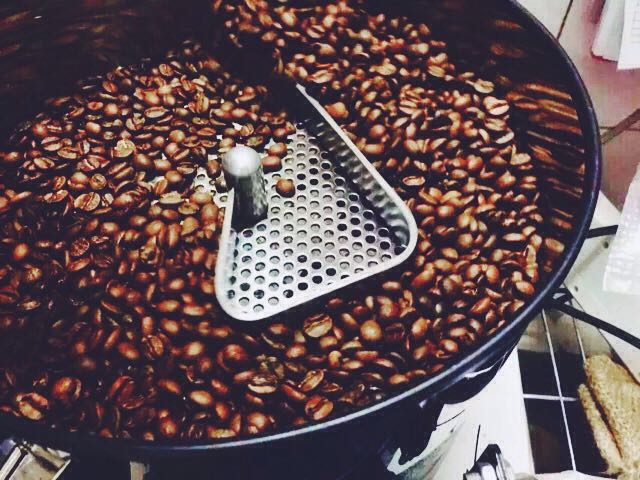
The Rabe Coffee Tree was first introduced to Ecuador in 1952 and its coffee is of good quality, especially the coffee harvested in early June. Ecuadorian coffee beans can be divided into two varieties: Galapagos and Gigante, both of which have the characteristics of large granules and heavy weight. Ecuadorian coffee can be divided into first class (No.1) and super excellent (Extra Superior) according to quality.

Taste characteristics of large particle Ecuadorian coffee varieties introduction to the flavor of boutique coffee beans in the manor
The Arabica coffee tree was first introduced to Ecuador in 1952 and its coffee is of good quality, especially the coffee harvested in early June. Ecuadorian coffee beans can be divided into two varieties: Galapagos and Gigante, both of which have the characteristics of large granules and heavy weight. Ecuadorian coffee can be divided into first class (No.1) and excellent (Extra Superior) according to its quality.

Breakfast in Paris is a cup of milk coffee latte
The large cup without a handle is full of milk coffee. If you drink slowly in a quilt on a winter morning, the body warms up and the sense of tiredness disappears. Put the French-roasted deep-fried coffee and the same amount of warm milk in two cups, one in each hand (the solidified grease film will float on the milk, be careful not to overheat the milk), and pour two cups of liquid into large cups at the same time.

Varieties of coffee beans how long does it take for coffee trees to blossom
The Liberian species, the large seed species, is native to Liberia in Africa, as well as a few countries such as Malaysia. Its cultivation history is slightly shorter than the other two coffee trees. Liberian coffee trees are suitable for growing in lowlands. Its trunk is high and strong, it is 18 meters high, its leaves are large and tough, and its fruits and coffee beans are also very large. Its seed coat is close to the seed kernel and is scarlet when it is mature. Cited

Coffee and Pope Coffee is grown in large quantities in the Arabian Peninsula
From the 15th century coffee was grown in great quantities in Arabia, and the whole Muslim world enjoyed this so-called gift of God. More and more Europeans exploring Arabia in the Middle East are curious and documenting the coffee story. Slowly Venetian merchants began to think about coffee re-export business. However, the Arabs were wary at first. After all, this was their divine fruit.
What is the better taste of large granulated beans and small granulated beans?
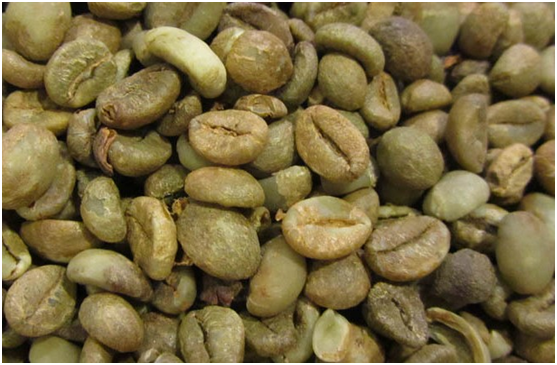
From the fruit state of coffee beans when they are picked from the tree to the state of raw beans that can be baked, the moisture content of coffee beans will be controlled between 9% and 13%, and it is not easy to bake if the water content is too high or too low. Generally, we get newly collected raw beans with water washing treatment, the moisture content is usually about 11.5% to 12.5%, half-washed Mantenin may reach 13%, and half-washed Brazil is 11% ~ 12% per day.

Yunnan small grain coffee Yunnan coffee beans
Yunnan coffee was planted on a large scale in the mid-1950s, with a planting scale of 4000 hectares at one time. By the end of 1997, the planting area of coffee in the province had reached 7800 hectares. At present, the planting area of the province accounts for 70% of the national area, and the output accounts for 83% of the whole country. Yunnan coffee has established the dominant position in China in terms of planting area and coffee bean production. The west and south of Yunnan Province

A large collection of specialty coffee
Specialty coffee includes Espresso (Italian espresso), Store-coffee with cream (super espresso with cream) and Latte Macchiato (latte macchiato).

Taste characteristics of large-grained Ecuadorian coffee varieties introduction to the flavor of fine coffee beans in the manor
The Arabica coffee tree was first introduced to Ecuador in 1952 and its coffee is of good quality, especially the coffee harvested in early June. Ecuadorian coffee beans can be divided into two varieties: Galapagos and Gigante, both of which have the characteristics of large granules and heavy weight. Ecuadorian coffee can be divided into first class (No.1) and excellent (Extra Superior) according to its quality.